The Biomolecular Neuropsychiatry Series
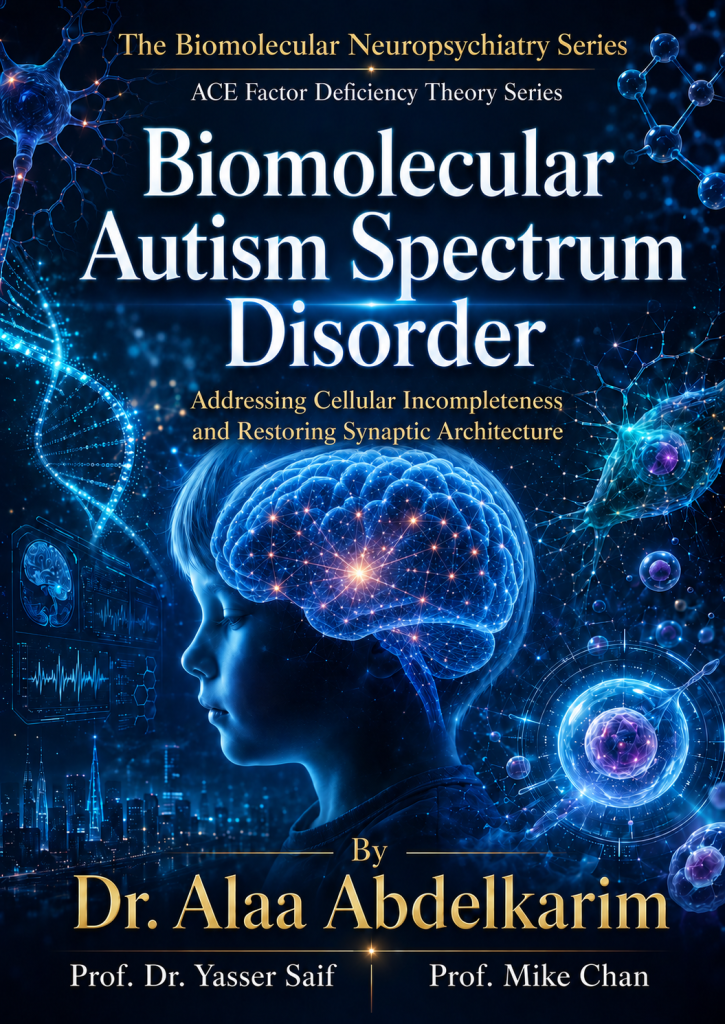
Biomolecular Autism Spectrum Disorder
The Biomolecular Neuropsychiatry Series
ACE Factor Deficiency Theory Series
Autism Spectrum Disorder (ASD) remains one of the most complex neurodevelopmental conditions of modern medicine. Despite significant advances in genetics, neuroscience, psychology, and behavioral interventions, current therapeutic approaches largely focus on symptom management rather than addressing the underlying biological processes that may contribute to the condition.
In Biomolecular Autism Spectrum Disorder, Dr. Alaa Abdelkarim presents a novel regenerative medicine perspective based on the ACE Factor Deficiency Theory. The book explores the possibility that many manifestations of ASD may be associated with deficiencies, imbalances, or dysfunctions in critical biomolecular factors involved in brain development, neuronal communication, synaptic regulation, neuroplasticity, mitochondrial function, immune modulation, and cellular repair.
Drawing upon current scientific literature in neuroscience, developmental biology, regenerative medicine, stem cell biology, and molecular psychiatry, this book examines autism through a biomolecular lens. It reviews the epidemiology, etiology, pathogenesis, and molecular characteristics of ASD while proposing an integrative framework that bridges conventional neuropsychiatry with emerging regenerative concepts.
The book further explores the theoretical role of organ-specific biomolecular supplementation derived from embryonic and regenerative tissues processed through advanced biomolecular technologies. These concepts are discussed as potential future directions for research aimed at supporting cellular repair, restoring biological balance, and enhancing neurological function.
Rather than positioning regenerative medicine as a replacement for established medical and behavioral interventions, the author advocates for a complementary approach in which regenerative medicine and conventional medicine work together to improve patient outcomes.
This volume is the first in the Biomolecular Neuropsychiatry Series, introducing readers to a new framework for understanding neurodevelopmental and neuropsychiatric disorders through the principles of biomolecular completeness, cellular regeneration, and functional restoration.
Designed for physicians, researchers, psychologists, neuroscientists, regenerative medicine specialists, students, and families seeking a deeper scientific understanding of autism, this book challenges conventional thinking while encouraging scientific dialogue, critical evaluation, and future clinical investigation.